
The living room is the only room in the house where a rug is asked to do everything at once. Reading. Conversation. Hosting. Screen evenings. Kids on the floor. The occasional spilled wine glass. A rug that ignores any one of those is the rug a homeowner replaces within three years.
TL;DR
- Match rug size to seating configuration first, palette second
- Pattern density should be quieter than a dining or bedroom rug — the room hosts too much visual activity for a busy rug to live well
- 1200 Reeds machine-woven Persian and hand-knotted wool are the constructions that handle a decade of living-room use
- The conversation rule (rug shares one tone with sofa, contrasts the floor) is the most reliable palette starting point
- The single most common mistake we correct: under-sized rugs that make the room look smaller, not larger
Why the living-room rug is the hardest decision in the house
Every other rug in a home answers one or two questions. The dining rug enforces geometry. The bedroom rug provides softness. The hallway rug survives traffic. The living-room rug answers all of them at lower intensity, simultaneously, for ten years. That’s why we counsel clients in our Sacramento showroom to start the rug conversation by walking around the actual room, not by browsing color palettes online. The room’s use pattern — who sits where, how often, what they’re doing — predicts the right rug far better than any swatch.
Sizing by sofa configuration
The reliable starting frame is what the seating looks like from above. A single sofa with two flanking chairs in a 14×16 ft room asks for an 8×10 (all furniture legs off the rug, the rug floats as a defined zone) or a 9×12 (front legs of all pieces on the rug, the rug becomes the seating platform). The 9×12 reads more anchored and is the choice most living rooms benefit from. A sectional asks for our largest 10×13 because the sectional’s mass demands a generous floor footprint — under-sized rugs under sectionals are the single most common scale mistake we correct in the showroom. Two-sofa layouts (facing or L-shape) want 10×13 and, past that, a two-zone layout. See our oversized rugs guide for living rooms over 400 sq ft.
Pattern density for daily living
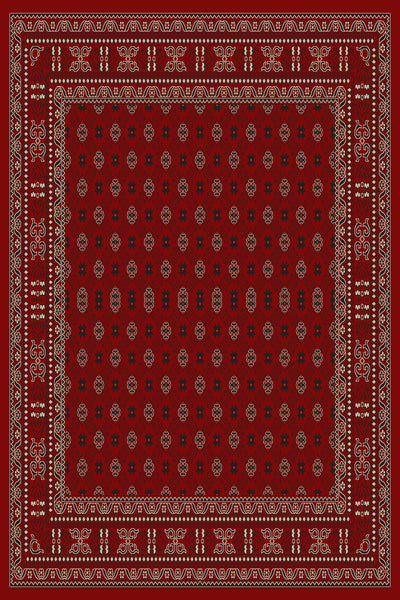
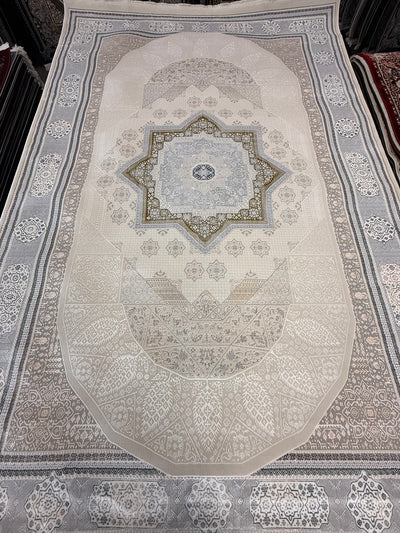
Living rooms have more visual activity than any other room in the house: art on the walls, throws on the sofa, coffee table books, screens, plants, occasional toys. A busy rug stacks more pattern into a room that’s already pattern-saturated, and the result reads cluttered. The reliable move is moderate-density Persian (visible medallion, supporting motifs, a defined border) with a calmer field. Quiet Persian medallions in our Cream + Ivory Edit demonstrate the right density range for most living rooms. Solid or near-solid rugs are harder to live with than people expect — every dropped crumb, every vacuum line, every pet hair shows.
Material decisions for long-term living-room use
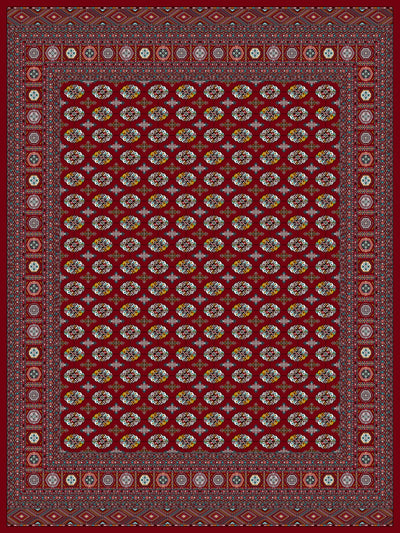
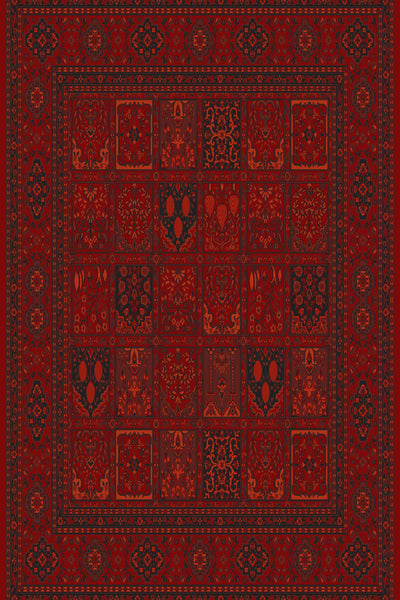
For the online catalogue, 1200 Reeds machine-woven Persian (heat-set polypropylene on a woven cotton backing) is the construction that genuinely tolerates a decade of heavy traffic — and it is water-safe, so a spill washes right out rather than setting. Hand-knotted wool is the durability gold standard above that: a decade of daily use produces patina rather than wear, and those pieces are shown in our Sacramento showroom by appointment. Avoid high-pile shag, viscose, or silk in a primary living room — viscose mats and stains permanently, silk is too delicate for floor traffic, and shag traps everything that lands on it. For homes with pets or young children, machine-woven 1200 Reeds is often the more honest choice than a hand-knotted piece you will be afraid to use.
Style alignment
Traditional living rooms — the room is asking for 1200 Reeds or hand-knotted Persian with a defined medallion and a complete border, in a palette that anchors the upholstery. Transitional rooms — quieter pattern, more cream and ivory, less border weight; medallion can be soft or oval. Modern rooms — near-solid with colour movement, or graphic flat-woven; pattern should read as texture, not narrative. California-eclectic and coastal-modern — cream-ground with quiet medallion, soft teal or navy accents; let the rug be the warmth in a cool-toned room.
Palette framework (after function)
Once size and material are settled, palette becomes the conversation. The conversation rule (rug shares one tone with sofa, contrasts the floor) is the most reliable starting point — see our sofa pairing pillar for the full framework. Living rooms specifically tolerate warmer palettes than dining rooms because the room is used at all hours and warm tones read welcoming under both daylight and warm-LED evening light. The classic Persian ivory + rust + navy triad lands cleanly in 80% of California living rooms we work with.
Floor + ceiling considerations
Dark hardwood living rooms benefit from cream-ground rugs that lift the floor; light oak or LVP benefit from saturated medallions or stronger borders that define the seating zone. High-ceilinged rooms (10+ ft) can carry pattern weight that low-ceiling rooms (8 ft) can’t — in low-ceiling rooms, quieter rugs prevent visual heaviness. One practical note: our rugs have a woven cotton backing and, from roughly 3 m² up, hold their place on hardwood or LVP without a pad. We do not sell pads. See our light direction guide for how south-facing California living rooms read warm-amplified versus north-facing rooms reading cooler.
The mistakes we correct most often
Under-sized rugs (the ‘postage stamp’ effect) are the dominant living-room rug mistake. The fix is almost always to go one full size up: 8×10 to 9×12, 9×12 to 10×13. The room reads larger and more composed, not smaller. The second most common mistake is choosing a rug that competes with the upholstery instead of supporting it — a strong patterned rug under a strong patterned sofa creates visual fatigue. One of the two should be quiet.
From our Sacramento showroom
Living-room rug conversations make up the largest share of consultations in our Sacramento showroom. The most useful diagnostic is a single photograph of the room from the doorway, plus a tape-measure record of the sofa-to-wall distance. With those two pieces of information, we can usually narrow the rug size and palette family before any rug comes off the wall. Clients from Folsom, El Dorado Hills, Roseville, Granite Bay, Carmichael, Land Park, East Sacramento, and Davis routinely bring photos in and leave with a 10×13 they hadn’t imagined was the right size when they walked in — and if the room genuinely needs more than that, we say so rather than sell around it. Visit the showroom with a photo and the wall-to-sofa measurement and the conversation moves quickly.
Related guides
- Rug by room (Cluster 7 pillar)
- Great room and open-concept rugs
- Sofa pairing pillar
- Oversized rugs guide
Frequently asked questions
What size rug do I need for my living room?
For a standard living room with a sofa and two flanking chairs, 9×12 is the reliable default (front legs of all furniture sit on the rug). For a sectional or larger seating arrangement, our largest 10×13. The most common mistake is going too small — if you’re uncertain between two sizes, go larger.
Should all the legs of my sofa sit on the rug?
It depends on the room size. In larger living rooms, all legs on the rug is the most settled, anchored look. In smaller rooms, front legs on the rug (with back legs on the floor) is the standard compromise — the rug still defines the seating zone but doesn’t need to be impractically large.
How patterned should a living room rug be?
Moderate. Living rooms have more visual activity than any other room (art, throws, coffee table books, plants), so a busy rug stacks too much pattern into the room. A defined medallion with quieter field motifs lives better long-term than either a solid or a busy allover pattern.
What rug material lasts longest in a living room?
1200 Reeds machine-woven (heat-set polypropylene) is the construction we stock that genuinely handles long-term daily traffic, and it is water-safe. Hand-knotted wool is the durability gold standard above it and is shown in our showroom by appointment. Avoid viscose, silk, or high-pile shag in primary living rooms.
Does the rug have to match the sofa?
No, and matching is usually the wrong instinct. The conversation rule is that the rug shares one tone with the sofa and contrasts the floor — not that it matches. A rug that exactly matches the sofa color erases visual depth in the seating zone.