
Green is the most context-sensitive sofa color we sell rugs for. The same sage sectional reads ‘fresh transitional’ in one room and ‘1970s den’ in another — the rug, more than the wall paint or art, is what makes the difference.
TL;DR
- Sage is forgiving — ivory-ground Persian with rust + soft navy reads relaxed-modern
- Olive is warmer and earthier — pair with terracotta, ochre, or madder-leaning rugs
- Forest/emerald is already dominant — keep the rug cream-quiet, low-contrast, ornamental rather than colorful
- Avoid green-on-green; always insert a cream/ivory beat between sofa and rug
- If floor is walnut or has any green undertone, the rug must lighten — not match
Why green sofas need careful pairing
Green is the one upholstery color that already references the natural world. The rug can either continue that conversation — botanical motif, earthy palette — or it can pull the room toward warmth as a deliberate counterpoint. What rarely works is using the rug to add more green: floor undertone, sofa, rug, and houseplants stacked together produce the ‘garden center’ effect that the sofa was supposed to elevate above.
Sage sofa
Sage is desaturated and grey-leaning — it functions like a soft neutral with personality. Our most reliable pairing is an ivory-ground Persian with rust medallion and soft navy border (the Blue Persian collection reads cleanly here). The cream gives the eye relief, the rust warms the sage, and the navy pulls the palette into transitional-traditional territory. For a more coastal-modern read, swap the rust for soft teal — sage + ivory + teal is one of the calmest palettes we shoot in the showroom.
Olive sofa
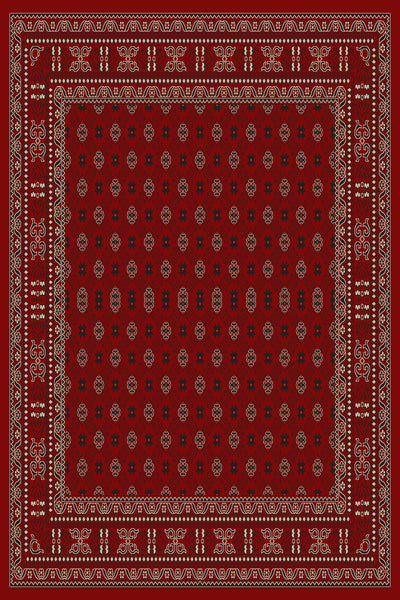
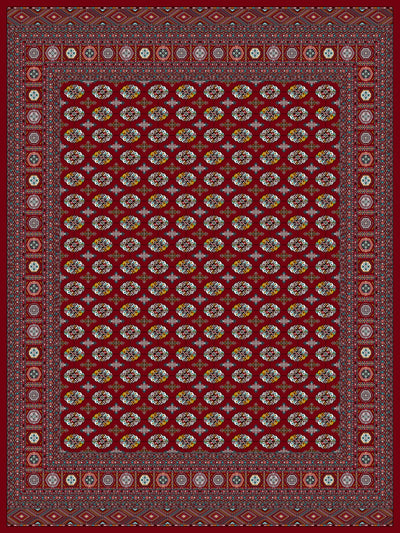
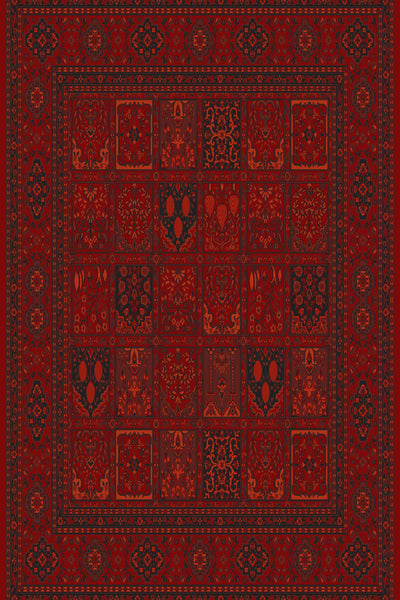
Olive is sage’s warmer, earthier sibling — there’s brown and yellow in it. That changes the palette logic: olive wants more warmth, not contrast. The best move is a Persian rug with terracotta, ochre, or madder-red ground tones — the kind found in our burgundy/oriental warm palettes. Cream-grounds still work, but they need warm motifs (rust, madder, mustard) rather than cool ones (navy, teal). Olive + grey rug is the room that reads ‘stalled’ — too much earth tone with no warmth source.
Forest and emerald sofas
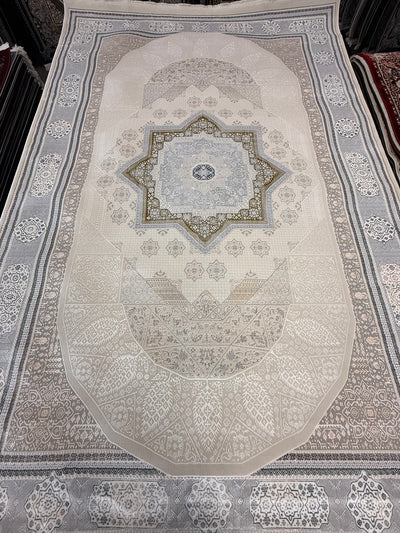
Forest and emerald are statement colors. They already carry the room. The rug’s job is to recede — cream ground, low-contrast medallion, ornamental rather than colorful. Our Cream + Ivory Edit is the right starting point. The mistake here is matching: an emerald sofa with a teal or jewel-tone rug reads forced, like a costume change in the middle of a scene. Let the sofa be the color, let the rug be the texture.
Material matters
Linen sage: casual register — pair with a flat-woven or low-pile hand-knotted rug; high-pile reads heavy under linen. Velvet emerald: formal register — wants hand-knotted wool with cream ground and quiet medallion. Performance sage (Crypton, Sunbrella): family-room context — machine-woven Persian-design holds up; don’t bring an antique into a sectional-and-snack room. Boucle olive or sage: tactile-modern — keep the rug abrash and hand-knotted; flat-woven reads thin.
The floor problem
Green sofas have a specific floor risk: walnut and some grey-LVP installations carry a subtle green undertone. Place a green sofa on a green-undertone floor with no rug between them and the room reads damp. The rug must lighten — cream, ivory, or warm-neutral ground — to break the green chain. Don’t try to bridge with another green tone in the rug; that compounds the problem. On white oak or red oak, the warm wood undertone already does that work, so you have more rug freedom. See our oak floor pairing guide for more on this.
Sectionals + scale
Most California great-room green sectionals need a 9×12 minimum to read properly anchored. If front legs sit fully on the rug, you can go 8×10; if you want the rug to host the full coffee-table cluster with breathing room, our largest 10×13 is the move. Past that, two rugs zoning the space beats one oversized piece — see our oversized rugs guide for sizing logic on great rooms over 350 sq ft.
From our Sacramento showroom
Green sofas come into the Sacramento showroom mostly from Folsom, El Dorado Hills, and East Sacramento — homes with strong garden views or transitional-craftsman bones. The pattern we see: the customer brings a photo of their olive or sage sofa, and our job is to talk them out of a green-coordinated rug and into a cream-with-rust Persian. The before-and-after on the showroom floor convinces faster than any argument. If you’d like to bring a fabric swatch in, our showroom can lay several rugs in your palette range and let you decide in natural light.
Related sofa pairing guides
Frequently asked questions
What rug color goes with a sage green sofa?
Cream or ivory ground with rust + soft navy is the most reliable pairing. The cream breaks the green chain, the rust adds warmth, and the navy pulls the palette into transitional territory. Avoid green-toned rugs — they double down on the sofa instead of complementing it.
Does an olive sofa need a warm or cool rug?
Warm. Olive already carries brown and yellow undertones, so cool rugs (grey, navy-dominant, teal) leave the room feeling unresolved. Terracotta, ochre, madder-red, and cream-ground Persians with warm motifs are the better path.
Can I put a green-toned rug with a green sofa?
Generally no. Green-on-green eliminates the contrast that makes the sofa read as a color choice rather than a default. The exception is when the rug’s green is a minor accent inside a cream-or-rust dominant field — a thin green border on an ivory ground reads as conversation, not duplication.
What rug works with an emerald velvet sofa?
Cream-ground hand-knotted with a quiet medallion. Emerald velvet is already the room’s color and texture statement; the rug needs to recede. Jewel-tone rugs (teal, deep blue, ruby) compete and make the room read costume-y.
Does a green sofa work over walnut floors?
Yes, but the rug becomes critical. Walnut carries a slight green undertone that, paired with a green sofa, can make the room read damp. A cream or ivory ground rug breaks the green chain and lets both the sofa and the floor read as distinct intentional choices.