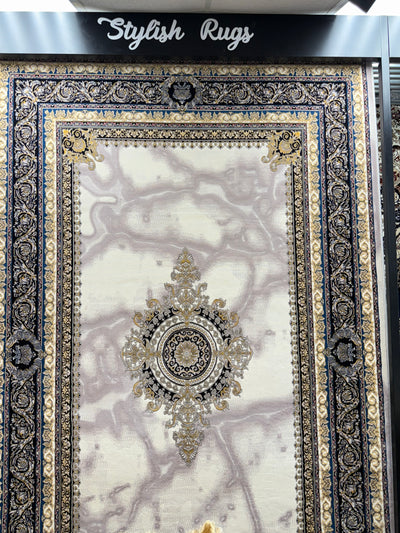
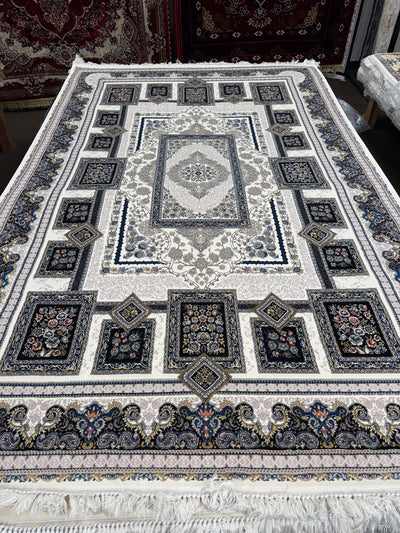
Boho and global eclectic interiors have a paradoxical reputation. They look effortless and accumulated — as if pieces were collected over years of travel and arranged without planning. The rooms that actually achieve that look are heavily edited and disciplined. The accidental boho room is messy; the deliberate boho room is layered. The difference is palette anchoring, intentional pattern mixing, and texture stacking that's chosen, not just collected. This guide is the working framework: how to choose rugs that look like they belong in a boho room without forcing the look.
TL;DR
- Boho is palette-anchored eclecticism — pick one palette family (warm earth or muted jewel) and let patterns vary within it
- Pattern vocabulary: tribal, kilim, Moroccan, Berber, vintage Persian, soumak — pattern-forward and texture-forward
- Layering is encouraged and expected — larger neutral or natural-fiber base with smaller patterned accent on top
- Mix pattern styles but hold palette constant — three different patterns in the same warm-earth family looks intentional; same pattern in three palettes looks confused
- Look for genuine vintage and one-of-a-kind pieces; mass-produced "boho" rugs read flat compared to real provenance pieces
What boho actually means in rugs
Boho — short for bohemian — describes an interior aesthetic that prizes collected-over-time appearance, global pattern vocabulary, layered textures, and a deliberately unfinished look that signals lived-in personality. Global eclectic is the more design-forward version of the same aesthetic — slightly more curated, slightly more deliberate, but sharing the same vocabulary of mixed patterns, warm palettes, and provenance pieces. In rugs, both styles favor pattern-forward designs over solids, vintage and one-of-a-kind pieces over standardized production, and layering over single-rug minimalism. The discipline behind the look is palette anchoring — the patterns vary but the palette family stays consistent.
The palette anchor
The single most important boho discipline is palette anchoring. Without it, mixed patterns read as chaos; with it, they read as collection. Two palette families work consistently. Warm earth + cream — terracotta, rust, ochre, walnut, mustard, with cream and ivory as the neutral connector; suits Moroccan rugs, vintage Persian Heriz and Hamadan, kilims in warm tones. This is the most common boho palette. Muted jewel + ivory — saturated-but-softened indigo, teal, persimmon, deep gold, soft burgundy, with ivory as the connector; suits suzanis, vintage Tabriz, soumak weaves, deeper-toned Moroccan pieces. Choose one family and stay within it. Mixing both families creates the "confused" look boho is unfairly accused of.
The pattern vocabulary
Boho rugs lean heavily on specific pattern traditions. Tribal Persian and Caucasian — Qashqai, Bakhtiari, Lori, Shiraz, Caucasian Kazak; bold geometric motifs, warm palettes, asymmetric drawing. Moroccan — Beni Ourain (cream with charcoal diamond), Boucherouite (recycled rag with mixed bright colors), Azilal (cream with abstract figures). Kilim and flat-weave — Turkish kilims, Persian sumak, Afghan kilims; bold geometric patterns in warm or jewel palettes. Vintage and overdyed — vintage Persian or Turkish rugs that have been chemically overdyed in a single saturated color (turquoise, magenta, persimmon); the look is dramatic and unmistakably boho. Suzani-influenced — patterns inspired by Central Asian embroidery traditions; ornate medallions in jewel palettes.
Layering — the signature move
If there is one move that says "boho" instantly, it is rug layering — a larger neutral or natural-fiber base rug with a smaller pattern-forward rug placed at an offset angle on top. The base is usually jute, sisal, wool sisal, or a quiet vintage Berber; the top is usually a tribal Persian, vintage Turkish, or Moroccan piece. The offset angle — top rug not aligned with the base — adds the casual collected feel. The protocol: top rug should be 2/3 the dimensions of the base; pattern and palette of the top rug should anchor the room's accent palette; pile heights should be compatible (avoid thick shag on thick shag — one needs to read as foundation). See layering rugs — when to do it for the full protocol.
How to mix patterns without confusion
The discipline of mixing patterns relies on holding one or two design axes constant while varying others. Hold palette constant, vary pattern — three different patterns (tribal Persian, Moroccan diamond, Turkish kilim) all in warm-earth palette read coordinated. Hold scale roughly constant, vary motif — three medium-scale patterns vary cleanly; three at wildly different scales fight. Hold texture variety, but stack purposefully — flat-weave + hand-knotted pile + soumak is three different textures that work together; chaos comes from mixing without intention. The general rule: hold two axes constant out of (palette, scale, texture, motif). Varying all four is the "chaos" version.
The vintage and provenance preference
Boho aesthetic has a strong preference for vintage and provenance pieces over standardized production. The reason is partly visual (vintage pieces carry tonal depth and slight asymmetries that mass production can't reproduce) and partly philosophical (boho aesthetic values storied objects over disposable ones). For genuine boho effect, prioritize vintage Persian or Turkish pieces over new "boho-style" reproductions. Vintage tribal rugs (Qashqai, Bakhtiari, Lori) and vintage Moroccan pieces (genuine Beni Ourain woven in the High Atlas) carry the provenance that defines the look. For care of vintage pieces see antique and vintage rug care.
Pile height and texture stacking
Boho rooms welcome the full range of pile heights — flat-weave kilims, low-pile tribal Persians, medium-pile vintage Moroccans, and thick-pile Berber and shag pieces all belong. The key is texture stacking rather than uniform pile. A flat-weave kilim near a high-pile Berber adds tactile interest; three medium-pile rugs in similar weight read flatter. For room-by-room pile decisions see high pile vs. low pile by room. The bedroom layer often goes thicker (Beni Ourain or shag for tactile comfort); living zones can go either direction depending on furnishings.
What doesn't work in boho
Three common mistakes. Unanchored color — boho without a palette anchor reads as a yard sale; you need to commit to warm-earth or muted-jewel and stay there. Mass-produced "boho" rugs — polypropylene or synthetic rugs printed with boho-style patterns read flat and one-dimensional next to genuine vintage; the depth that boho aesthetic values can't be machine-printed. Style purity — boho is by definition mixed, so a room with only one boho rug and no other layering vocabulary doesn't read boho; it reads as one statement piece. Boho needs the texture stacking, multiple patterns, and layered furniture vocabulary to land.
What pairs with boho rugs
Boho rugs pair with mixed furniture vocabularies. Vintage wood furniture — old farmhouse tables, mid-century walnut, dark wood antiques; warm wood reads well with warm-earth boho rugs. Mixed-material seating — cane chairs, leather settees, rattan, kilim-upholstered sofas; these match the global eclectic furniture vocabulary. Layered textiles — throw blankets, accent pillows, woven wall hangings that share the rug's palette; the room reads as a complete textile composition. For sofa-specific guidance see leather sofa rugs and sofa pairing pillar (Cluster 6).
From our Sacramento showroom
Boho and global eclectic consultations come most often from creative-professional households in midtown Sacramento, R Street lofts, East Sacramento bungalows, Land Park craftsman homes, and architect-renovated Carmichael properties. Our standard approach: identify the palette anchor first (warm earth or muted jewel), then propose two or three pieces (often one vintage Persian, one Moroccan or kilim, one neutral base for layering) that work together. For customers building over time, we often suggest starting with one statement vintage piece and adding the layering pieces over months. Visit our showroom for boho consultations.
Related guides
- Designer rug styles (Cluster 10 pillar)
- Color and palette (Cluster 5 pillar)
- Layering rugs — when to do it
- Antique and vintage rug care
- Patterned vs. solid rugs
- High pile vs. low pile by room
Frequently asked questions
What is a boho rug?
A pattern-forward rug from a global textile tradition — tribal Persian, Moroccan, kilim, Berber, soumak, or vintage overdyed — used in a layered interior that mixes patterns and textures within a unified palette family. Boho rugs are characterized more by pattern vocabulary and provenance than by any single design.
Can I mix different patterned rugs in a boho room?
Yes — pattern mixing is central to boho. The discipline is to hold the palette family constant (warm earth or muted jewel) while varying the pattern motifs. Three different patterns in the same warm-earth family look intentional; three patterns in unrelated palettes look confused.
What colors work for boho rugs?
Two reliable palette families. Warm earth + cream (terracotta, rust, ochre, walnut, mustard with cream/ivory connectors). Or muted jewel + ivory (saturated-but-softened indigo, teal, persimmon, deep gold, soft burgundy with ivory connectors). Pick one and stay within it.
Should boho rugs be vintage?
Genuine vintage and provenance pieces are most authentic. Vintage tribal Persians (Qashqai, Bakhtiari, Lori), vintage Moroccan Beni Ourain or Boucherouite, and Turkish kilims carry depth that mass-produced reproductions can't match. New hand-knotted pieces in vintage styles are the next best option.
How do I layer rugs in a boho room?
Larger neutral or natural-fiber base (jute, sisal, vintage Berber) with a smaller pattern-forward rug (tribal Persian, Moroccan, kilim) placed at an offset angle on top. The top rug should be 2/3 the dimensions of the base and should anchor the room's accent palette.