The short answer: the fringe of a Persian rug is the visible end of the warps — the foundation threads that run the length of the rug. When the fringe wears, frays, or loosens, the warps unravel one by one, and the foundation begins to come apart from the edges inward. Mild fringe wear is normal on a 10+ year old rug; visible warps releasing from the body of the rug is urgent — stop using the rug as is and get a specialist quote within 30 days, before the unraveling moves into the field of the rug.
From the Sacramento workshop: fringe is the most-misunderstood part of a Persian rug — it's not decoration, it's the foundation showing. Here's how to tell when fringe damage is normal versus urgent.
What fringe actually is (the structural truth)
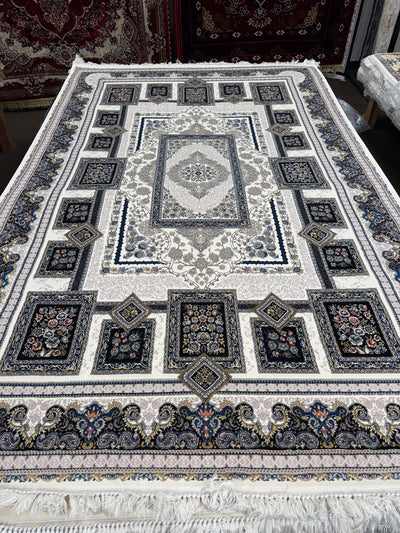
The fringe of a Persian rug is not added to the rug for decoration. The fringe is the warps themselves — the long foundation threads that run the entire length of the rug. The weaver ties every knot around two adjacent warps and locks them with weft passes between rows. Where the knotting ends at the top and bottom of the rug, the warps continue as visible threads, finished by knotting them together in pairs or weaving a small selvedge band.
This means the fringe and the foundation are the same threads. When the fringe wears down to the body of the rug, the warps unravel into the rug field — and once one warp is gone, the knots that were tied around it loosen, then fall out. The damage compounds.
Normal fringe wear (don't panic)
- Minor thinning of fringe length on a 10+ year old rug.
- A few warps in the fringe that have shortened or twisted.
- Occasional small fringe-end knots coming undone (1–2 per linear foot per year is normal on an old rug).
- Yellow or dust-colored discoloration on white cotton fringe — this is age and dust, not damage.
These do not require repair. They are normal markers of an aging rug.
Urgent damage (act within 30 days)
- Warps releasing from the body of the rug — you can see the foundation threads coming free of the knotted field.
- Missing knot rows immediately above the fringe end (the first 1–2 rows of pile are gone).
- One entire side of the fringe gone (typically the side that was nearest a vacuum or foot traffic).
- Visible warps with no knots attached for more than 1/2 inch into the body of the rug.
- Multiple holes appearing along the end of the rug.
Stop using the rug as is (move it to a low-traffic position, or roll it up and store it) and bring it in for a specialist quote within 30 days. Once the unraveling moves into the field of the rug, you are no longer paying for fringe repair — you are paying for foundation repair, which is 3–5× more expensive.
Why fringes wear (most common causes)
Vacuum beater bars (the leading cause)
A rotating vacuum beater bar moving over the fringe pulls warps out of the foundation. This is the single most common cause of fringe damage we see in the workshop. Solution: vacuum with suction only (beater bar off or disengaged) and avoid running the vacuum over the fringe — vacuum from the body of the rug outward, lifting at the edge. See our Persian rug cleaning guide.
Foot traffic on the fringe
If the rug is placed where foot traffic crosses the fringe (entryways, doorways, the foot of stairs), the warps are stepped on directly hundreds of times per week. Solution: position the rug so foot traffic crosses the body, not the fringe ends. For runner placement, see our runner placement guide.
Moths
Moths eat wool, but they sometimes feed on the protein layer in older cotton-wool blend fringes (especially if the cotton has absorbed sweat, food, or pet residue over decades). If you see clean holes in the body of the rug near the fringe, inspect the fringe itself for missing threads. Treat the rug professionally — see our Persian rug repair guide.
Dragging across hard floors
Sliding the rug across a hard floor (during cleaning, moving furniture, vacuuming) drags the fringe under the rug body and snaps warps. Solution: pick up the rug to move it, or roll it before sliding.
What fringe repair actually involves
There are two repair approaches depending on how far the damage has progressed:
Re-knotting (lower cost, while warps are still intact)
If the warps are still present but unsecured, the specialist re-ties the end knots that hold the foundation together. This stops the unraveling. Cost is typically $25–$45 per linear foot of rug width.
Splicing new warps (higher cost, when warps are missing)
If warps are missing — even 1/4 inch into the foundation — the specialist must splice in new warps, then re-knot the lost rows of pile to match the original pattern. Cost is typically $60–$120 per linear foot of rug width, plus the cost of replacing any missing pile knots.
Selvedge end-band rebuilding (highest cost)
If the entire end of the rug has unraveled into the field, the specialist must rebuild the selvedge end-band, including replacing wefts and re-knotting multiple lost rows of pile. This is essentially full-end restoration and runs $200–$800 per end depending on rug size and density.
What NOT to do at home
- Do not glue the fringe.
- Do not tape the fringe.
- Do not sew across the foundation with a sewing machine — straight stitching across warps is the most common DIY mistake and almost always destroys the foundation.
- Do not trim loose warps. Trimming pulls more of the foundation through, and a specialist needs the existing warps to splice from.
How to slow further damage while waiting for repair
- Stop running the vacuum near the fringe.
- Reposition the rug so foot traffic crosses the body, not the fringe end.
- If urgent damage is visible, roll the rug pile-out (not pile-in) for storage until repair.
When to bring it in
For Sacramento clients, bring the rug to the showroom any time — no appointment needed for a free fringe assessment. We'll tell you honestly whether it's normal wear or urgent damage, what the repair would cost, and whether you should keep using the rug in the meantime.
— The Stylish Rugs Editorial Desk · Sacramento, CA · 2025-03-12