The short answer: On a per-year amortized basis, a hand-knotted wool rug is usually the cheapest option, not the most expensive. A $3,400 Khal Mohammadi at a conservative 35-year lifespan is $97 per year; a $740 Ruggable cover replaced once in five years is $258 per year over the same window. Washable polyester wins on cash flow and short horizons (under three years); a dense machine-woven Persian-design rug wins the spill-tolerant middle at a fraction of either price; hand-knotted wool wins everything beyond a decade. Note: hand-knotted carpets are shown at our Sacramento showroom by appointment and are not listed online — our online catalog is machine-woven Persian-design, woven in Türkiye.
An honest field comparison from our Sacramento showroom.
The question we are asked most often by families with young kids or new pets is some version of this: "Should I just get a Ruggable, or is it actually worth spending three or four times as much on a hand-knotted wool rug?" The marketing on both sides is loud, and the honest answer depends on five specific variables that almost never appear in product copy. This is the side-by-side comparison we walk every undecided family client through — what each option genuinely costs per year, where each one wins, and where each one quietly fails. The broader category map this article slots into is our family-rug honest guide.
The two products on the table
Full-machine-washable rugs (Ruggable, Tumble, Lorena Canals, Washable+ from Revival) are a printed polyester top cover that attaches via velcro or zipper to a separate non-slip rubber pad. The cover is designed to detach, fit in a household washing machine, and tumble-dry low. Typical pricing for an 8×10 runs $250 to $890 depending on brand and design; the rubber pad is a one-time purchase ($120 to $180) that lasts the life of multiple covers.
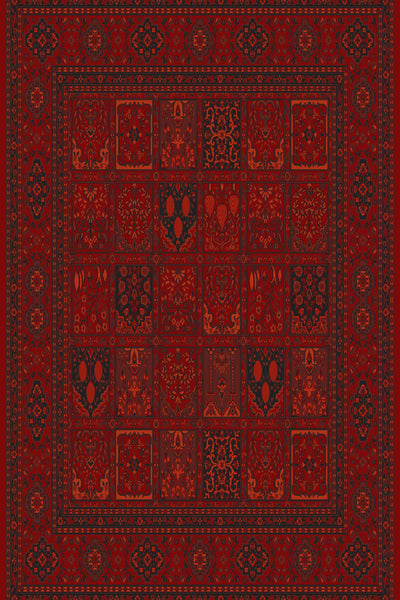
Hand-knotted wool rugs in the family-durable price band — Afghan Khal Mohammadi, Caucasian Kazak, low-pile Heriz, low-pile Bidjar — are 100% wool pile hand-tied on cotton or wool foundation by individual weavers. Typical pricing for an 8×10 runs $2,400 to $5,500 depending on origin, knot density, and design. Hand-knotted carpets are shown at our Sacramento showroom by appointment and are not listed online.
Both are legitimate categories. The honest comparison is about which one fits which room, which budget horizon, and which household composition.
Lifespan — what the data actually shows
The single most-mismatched expectation between the two categories is lifespan. Polyester full-machine-washable rugs do not last as long as the marketing implies, and hand-knotted wool rugs last dramatically longer than most American buyers realize.
Full-machine-washable, real-world lifespan. The printed polyester top cover begins to dull and pill visibly within twelve to thirty months of moderate foot traffic. The wash-cycle count is the dominant variable: each tumble cycle compresses the polyester fibers and slightly bleeds the printed color. A cover that gets washed every two months reaches "no longer presentable" condition in roughly two to four years. Brands extend cover availability for popular designs for a few years, so a refresh is possible — but at $200 to $700 per replacement cover, the refresh cost stacks fast. We have seen clients on their third Ruggable cover in five years at the dining room they bought it for.
Hand-knotted wool, real-world lifespan. A 200-knot-per-square-inch Khal Mohammadi or low-pile Kazak in a normal-traffic family living room measures lifespan in generations, not years. Wool fiber has a recovery characteristic that synthetics do not — compressed pile springs back, soiled fiber releases its dirt with vacuuming and occasional professional cleaning, and minor wear distributes evenly across the surface rather than concentrating in traffic lanes. Forty-year-old Khal Mohammadis on the secondary market regularly look better than five-year-old polyester.
Per-year cost — the math that changes most decisions
The number that resolves more comparison-shopping conversations than any other in our showroom is the per-year amortized cost. Doing this calculation honestly almost always inverts the assumed budget order.
Sample comparison, 8×10 in a family dining room:
- Full-machine-washable, mid-tier ($740 cover + $150 pad). Practical lifespan of cover: three years before noticeable degradation; one cover replacement at $400 within five years. Total five-year cost: $740 + $150 + $400 = $1,290. Per-year cost: $258.
- 2 Million Points polypropylene, mid-tier ($600). Even at a conservative ten years of family use that is $60 per year — and we do not quote lifespans in years, so treat that as arithmetic, not a promise.
- Hand-knotted Khal Mohammadi, mid-tier ($3,400). Practical lifespan: thirty-five years (conservative — most last longer with proper care). Per-year cost: $97.
The machine-woven option is the cheapest per-year of the three, and the hand-knotted wool still beats the full-machine-washable by a clear margin. The full-machine-washable is the most expensive per-year despite the lowest sticker price. This inversion is the single number we ask undecided clients to sit with for a moment before committing to a category.
Where the washable genuinely wins
The amortized math is not the only variable, and there are use cases where full-machine-washable is honestly the right answer. Four scenarios in which we tell clients to skip the hand-knotted and buy the Ruggable:
1. Genuinely temporary placements. First apartment that will be left in twelve to eighteen months. Dorm room. Rental property between long-term leases. The amortization math favors the cheaper sticker when the time horizon is under three years.
2. Children-under-three rooms with no other floor covering. The bedroom-as-playroom configuration for a toddler-only-child household where the rug is genuinely the primary play surface and will absorb daily play wear that no rug recovers from gracefully. A washable polyester is the honest answer for this single use case; we point clients to it without reservation.
3. Active puppy training months. The chewing-and-accident window from puppy month three through eighteen, roughly. It is a sensible window in which to use an inexpensive rug you will not mind replacing.
4. The first-rug-while-still-figuring-out-the-aesthetic phase. A new home where the buyer is not yet sure what direction the room will take. Polyester is the honest "rough draft" — easy to live with for eighteen months, swap out once the aesthetic settles, and graduate to wool for the permanent piece.
In all four of these scenarios, the trade-off favors the lower entry cost and the willingness to replace within a short horizon. The category that fails these use cases is not full-machine-washable; it is the buyer who tries to make a Ruggable last ten years in a high-traffic dining room.
Where the hand-knotted genuinely wins
Conversely, the use cases where hand-knotted wool is the obvious answer and full-machine-washable is the costly mistake:
1. Main living-room rug in a house the family intends to stay in. The room that hosts most of the social life of the household and is visible from most other rooms. The rug here sets the visual register for the whole space, and a printed polyester reads as transitional or budget-temporary in a way that a hand-knotted wool does not. Our family-rug pillar guide walks through the broader category map for the main-rug decision.
2. Multi-pet households with cats, large dogs, or both. Polyester pile compresses under repeated dog-weight transit and pills around play zones; the velcro attachment fails at corners that cats explore. Hand-knotted wool, especially low-pile Khal Mohammadi or Kazak, handles claws, weight, and shed fur far better. The fiber-and-construction question for pets specifically is covered in detail in our pets-and-rugs honest guide.
3. Hardwood floors with substantial dollar value. The rubber pad under a Ruggable or Tumble is typically thin and is sometimes too soft to protect quality hardwood from impact compression where furniture rests on the rug. A felt-and-natural-rubber pad under a hand-knotted wool rug protects the floor better and lasts longer.
4. Households where the rug needs to participate in the long-term aesthetic of the home. Hand-knotted Persian and tribal designs improve with age — patina, slight color softening, the small irregularities of hand-weaving — in a way that printed polyester explicitly cannot.
The two questions the comparison usually skips
Almost every washable-vs-hand-knotted comparison online treats this as a binary decision. In our showroom, we almost always end up surfacing two intermediate questions that change the answer.
First: does the room actually need to be machine-washable, or just spill-tolerant? These are very different requirements. A 2 Million Points machine-woven Persian-design rug (our 2 Million Points collection is the contemporary high end of this category) is genuinely spill-tolerant — most liquids bead on the surface and blot off with a damp cloth, and the rug rinses with a hose if a deep clean is needed. It is not machine-washable, but it is also not failing the test that "machine-washable" was supposed to pass. For households where the actual requirement is "I want to be able to clean a wine spill without panicking," a 2 Million Points is often the right answer at a far lower cost than full-machine-washable.
Second: is the rug going to be in a fixed position, or moved frequently? Full-machine-washable's central trick — the lightweight detachable cover — only matters if the cover actually comes off the rest of the rug frequently. If the rug lives in one room and gets occasional spills, the wash cycle is rare, and the polyester degradation under traffic dominates the experience. The "washable" value proposition is heavily skewed toward the first six months of ownership, when most owners do a few washes out of novelty; the second-year experience is closer to a slightly-tired printed polyester rug than a fresh one.
What construction actually means — the fiber question
The construction differences between these two categories are larger than most product pages suggest, and they are worth understanding before any purchase decision. Our fiber and construction guide covers the full taxonomy of how rugs are made, but the short version for this comparison:
Full-machine-washable construction. Two separate pieces — a printed polyester top cover and a rubber-blend non-slip pad. The cover is digitally printed on a polyester fabric base; the print sits on the surface of the fiber rather than being woven into it. This is why the surface fades visibly under sustained UV exposure and why the design loses crispness with each wash cycle.
Hand-knotted construction. Individual knots of wool tied by hand onto a cotton or wool warp, in counts ranging from 80 KPSI (Caucasian tribal) to 300+ KPSI (fine Persian city pieces). The color is in the fiber itself — natural wool dyed before being tied — so the design persists for the life of the wool, which is decades. There is no separate cover; the knotted surface is the rug.
This construction difference is why the lifespan inversion happens. Printed surfaces degrade with use; knot-dyed structures hold for generations.
What the wash cycle actually does to the cover
A specific note on the wash itself, because it is the variable most underestimated by first-time washable buyers. A standard household washing machine on a delicate cold cycle applies meaningful mechanical and thermal stress to a polyester rug cover. Each cycle:
- Compresses the printed surface against the drum (each spin compresses the pile by an estimated three to five percent of its original height — and the pile does not fully recover after twenty-plus cycles).
- Bleeds a small amount of the printed dye into the wash water (visible in the first few washes; the dye darkens slightly over the life of the cover).
- Stresses the velcro/zip attachment hardware (these are typically the first parts to fail and are not easily replaceable).
- Slightly degrades the rubber-backing material on the pad if washed with it (which most owners eventually do despite manufacturer guidance against).
None of these is catastrophic on its own; collectively they are why the practical lifespan in normal use lands at two to four years rather than the implicit ten-plus that the marketing suggests.
Cleaning the hand-knotted alternative — easier than most buyers expect
A common reason buyers reach for full-machine-washable is the assumption that hand-knotted wool rugs are difficult to clean. In practice, the opposite is often true for the first decade of ownership. Wool's natural lanolin resists most liquid penetration for the first three to five minutes — blotting a spill in that window resolves about ninety percent of household incidents. Periodic vacuuming (suction only, no rotating beater bar) handles routine soil. Deep cleaning is needed every three to five years and is done by a professional rug cleaner specializing in hand-knotted wool (typical cost $200–$400 for an 8×10). We do not wash rugs ourselves — ask us and we will point you to someone in the Sacramento area who does.
Per-year cleaning cost works out comparable to or lower than the per-year replacement-cover cost on a washable. Our at-home rug cleaning guide walks through the technique by fiber type.
The honest recommendation matrix
Pulling the whole comparison into one decision matrix:
- Time horizon under three years → full-machine-washable (Ruggable, Tumble). The amortized math works only if the horizon is genuinely short.
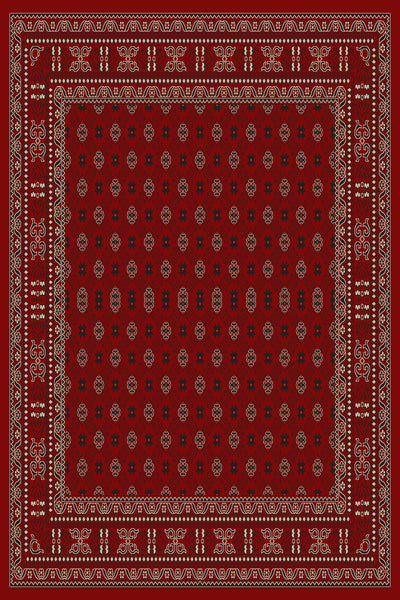
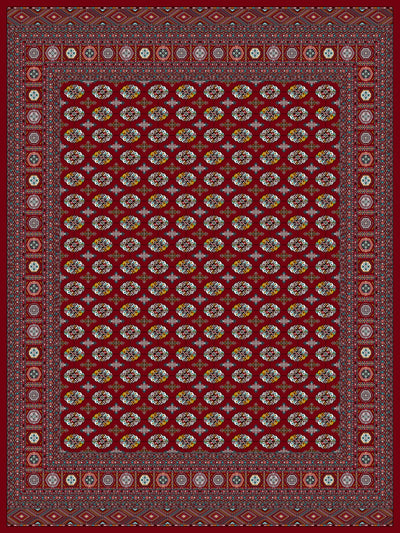
- A few hundred dollars and a medium time horizon → 2 Million Points machine-woven polypropylene with Persian-design pattern, roughly $250–700 depending on size. The honest spill-tolerance middle path, and far cheaper than the rest of this list. This is what our online catalog is.
- Budget $2,400 or higher and time horizon ten-plus years → hand-knotted Khal Mohammadi, Kazak, or low-pile Heriz. Shown at the Sacramento showroom by appointment.
About sixty percent of family clients who walk in convinced they need a Ruggable end up choosing a 2 Million Points or hand-knotted instead once the per-year math is on paper. The remainder end up with a combination — washable in the kid's bedroom or playroom, something permanent in the living room and dining room.
Come compare them in person
The single most useful thing we do for undecided clients is laying both options out on the floor side by side. A 2 Million Points polypropylene Persian-design, a hand-knotted Khal Mohammadi, and a friend's Ruggable when we can borrow one for the day. Walk on them for ten minutes; the difference in pile weight, surface temperature, edge stiffness, and color depth is decisive in a way no product photo conveys. Come visit the Sacramento showroom and we will set up the comparison for any size and palette you are considering.
—
Sirsh, Stylish Rugs Sacramento editorial. Last updated 2026-09-15.