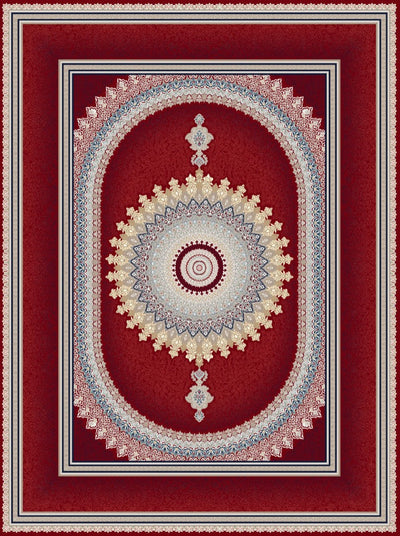
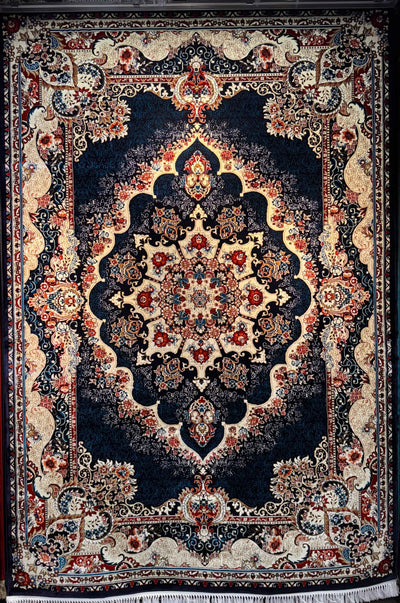
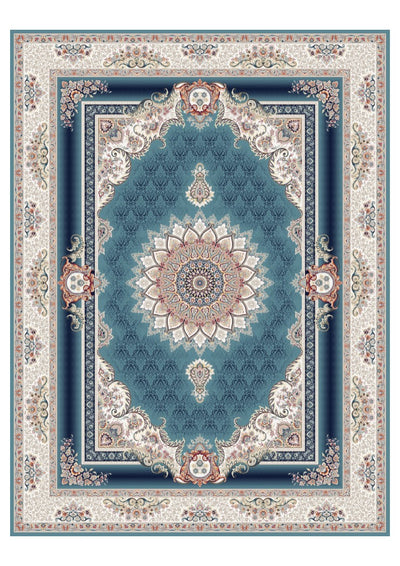
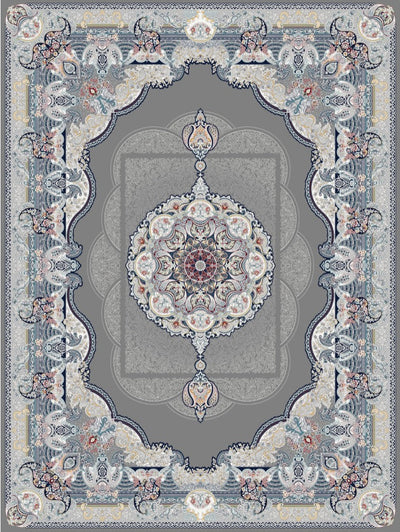
Most sofa-pairing advice stops at color. But two sofas in the same color — a navy velvet and a navy linen — do not want the same rug. Material decides whether the rug should add texture or quiet down, add pattern or recede, add sheen or absorb light. Get the material reading right and the rug will feel inevitable. Get it wrong and the room will feel slightly off without anyone being able to name why.
How material changes the room before color does
Every textile has three properties that interact with a rug: light behavior (does it absorb, reflect, or scatter?), surface texture (smooth, woven, or grain-faced?), and visual weight (how much physical mass the eye reads?). Velvet absorbs, linen scatters, leather reflects. Velvet is medium weight, linen is light, leather is heavy. Build the rug pairing around these three properties first — color choices follow naturally.
Velvet sofas — the matte light-absorber
Velvet drinks light. A velvet sofa looks deeper, richer, and slightly darker than the same color in any other fabric. It also creates strong color saturation without sheen, which means the rug has to carry the room’s visual texture — velvet won’t provide any.
Pair velvet sofas with rugs that have visible weave, pattern, or pile contrast. Hand-knotted Persian-inspired medallions, distressed traditional patterns, or low-pile flatweaves with strong graphic structure all work. Avoid extremely high-pile shag rugs with velvet — two heavy textures compete rather than layer. Also avoid silk-blend rugs with high sheen, which fight the velvet’s matte absorption.
Color-wise, velvet handles saturated, jewel-tone rugs beautifully because the matte surface keeps them grounded. Emerald velvet + Persian rug in oxblood and gold. Navy velvet + medallion rug in burgundy and ivory. Burgundy velvet + dusty blue and cream Persian. Velvet is the easiest sofa material to layer dramatic rugs against.
Linen sofas — the casual light-scatterer
Linen has visible weave, wrinkles softly, and scatters light unevenly. It reads casual, breathable, and slightly informal even in expensive grades. Linen is the most forgiving sofa material structurally — but it asks the rug to bring softness, not more roughness.
Pair linen sofas with rugs that are tactile but visually quiet. Wool low-pile rugs with distressed Persian-inspired patterns, faded vintage palettes, jute-wool blends, and Berber-influenced flatweaves all complement linen. Avoid graphic high-contrast modern rugs with linen — the visual languages clash. Linen pairs best with washed, muted palettes: dusty blue, soft sage, faded terracotta, antiqued gold, warm ivory.
The natural undertone of linen is slightly cool-cream, which means it fights aggressive warm-orange or hot-red rugs. Stick to either faded warmth (terracotta over crimson) or cool-leaning palettes (dusty blue, sage, slate, weathered indigo). Linen also handles patterned rugs in low-saturation colorways better than solid bright rugs.
Leather sofas — the hard reflective architect
Leather is the heaviest sofa material on this list. It has surface grain, reflects light unevenly, and develops patina over time. Leather brings architectural weight that demands a rug capable of holding its own — thin, washed, or pale rugs disappear under a leather sofa.
Pair leather sofas with rugs that have density, depth, and traditional pattern. Hand-knotted Persian-inspired medallions, classic Heriz-style geometrics, dark-grounded oriental designs, and high-density wool rugs all complement leather. The historical pairing of leather library furniture with hand-knotted rugs exists because the materials genuinely belong together — both age beautifully, both reward investment, both feel substantial.
Leather color narrows the rug palette further. Cognac and tan leather pair with burgundy, navy, and forest rugs. Chocolate and espresso leather pair with ivory-grounded rugs and softer mid-tones to avoid the room going entirely dark. Black leather wants warmth from the rug — oxblood, burnt orange, antiqued gold, deep burgundy. For full leather pairing detail, see our leather sofa rug guide.
Pile height vs. sofa material — the contrast rule
The rule of thumb: sofas with strong texture want rugs with subtle texture, and vice versa.
- Velvet (smooth, matte) — can take medium-pile patterned rugs or low-pile rugs with visible weave. Avoid extremely high pile.
- Linen (visible weave) — pairs best with low-pile, soft-pattern rugs. Avoid graphic high-contrast or aggressively textured rugs.
- Leather (smooth grain) — takes anything from low-pile flatweave to medium hand-knotted pile. Pattern matters more than pile height.
- Bouclé (heavily textured) — demands low-pile, visually quiet rugs. Bouclé + shag is too much texture.
- Performance fabric (smooth synthetic) — reads casual; pair with durable wool rugs in mid-saturation, family-friendly palettes.
Silk and silk-blend rugs — a special case
Silk rugs reflect light dramatically, which makes them a beautiful complement to velvet (matte vs. sheen contrast) and an awkward fit for linen (two scattered-texture surfaces). With leather, silk-blend rugs work in formal traditional rooms but feel out of place in casual leather contexts. Reserve high-silk-content rugs for low-traffic formal rooms and pair them with velvet, jacquard, or smooth dark-wood furniture.
Light direction changes the material reading too
A velvet sofa in a north-facing room reads even darker than it would in south light — the cool light deepens the matte absorption. Plan the rug pairing for the light condition the room is in most often, not the showroom condition. Our light direction guide walks through how north/south/east/west light reshape every color in the room, including sofa color.
The cross-cluster picture
- Sofa-pairing pillar — the color-first framework.
- Tan, beige, and camel sofa pairing — the most material-sensitive neutral category.
- Leather sofa pairing — deep dive into cognac, tan, chocolate, and black leather.
- Cream and linen sofa pairing — paler linen variants.
- Choose rug color from your palette — underlying color framework.
See the material pairing in person
Material reading is one of the few rug-and-sofa decisions that genuinely benefits from in-person evaluation. The way a wool pile catches light next to velvet, or a low-pile flatweave settles next to linen, doesn’t translate to a phone screen. If you’re sourcing a rug for a specific sofa, our Sacramento showroom carries a curated cross-section of hand-knotted and machine-woven traditional rugs available against fabric swatches. Book a consultation or visit us in person.
FAQ
What rug goes best with a velvet sofa?
Low- to medium-pile wool rugs with visible pattern — hand-knotted Persian medallions, distressed traditional designs, or graphic flatweaves. Velvet’s matte absorption asks the rug to carry the room’s texture. Avoid silk-blend or high-pile shag.
Is a linen sofa hard to pair with a rug?
Not at all — linen is one of the most forgiving sofa materials, but it pairs best with softer, washed palettes (dusty blue, sage, faded terracotta) rather than graphic modern rugs. Avoid aggressive textures that compete with linen’s natural weave.
Can you put a silk rug under a leather sofa?
Yes, in formal traditional rooms, but the casual character of most leather (cognac, distressed) sits better with hand-knotted wool than silk. Reserve silk-blend rugs for formal rooms with smooth dark-wood furniture.
Does sofa material matter more than sofa color when picking a rug?
They matter equally but answer different questions. Material decides whether the rug brings texture or quiet. Color decides the palette. Both readings have to align.
What rug pairs with a bouclé sofa?
Low-pile, visually quiet wool rugs. Bouclé already contributes heavy texture — the rug should recede into a subtle pattern or low-contrast palette. Avoid high-pile shag and busy traditional medallions with bouclé.