
Dark wood floors are handsome and unforgiving. They show dust, they make rooms feel smaller in low light, and they swallow any rug that is close to their own color. The right rug fixes most of that. It bounces light back into the room, gives the furniture a lighter base, and hides the paths where dust settles on the floor. Here's how to choose one for the three dark wood tones we hear about most.
Why contrast matters more on dark wood
On a light oak floor, almost any mid-tone rug works. On a dark floor, the room is already heavy, so the rug either balances it or adds to the weight. A cream or light gray rug on espresso wood makes the room read brighter and larger. A chocolate brown rug on the same floor makes the furniture look like it's floating on one dark mass.
That doesn't mean every rug has to be pale. It means the rug needs enough light color, either in the ground or in the pattern, to separate it from the wood when you look across the room. A useful test: take a photo of the room on your phone, switch it to black and white, and see if you can still find the rug's edge. If you can't, it's too close to the floor.
Walnut floors
Walnut is a medium-dark brown with a slightly warm, sometimes purple-gray cast. It's the most flexible of the dark woods.
- Ivory and cream are the classic choice and make walnut look rich.
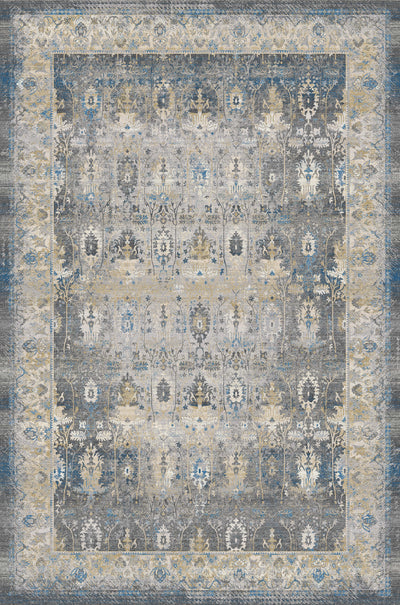
- Soft blue and blue-gray pick up the cool undertone in walnut and suit a modern or coastal room.
- Muted multicolor traditional designs with an ivory or light gray ground work well and hide everyday wear.
- Avoid mid-brown and tan rugs that land right on the wood's own tone.
Espresso and ebony floors
Espresso is nearly black-brown, and it's the floor where a light rug makes the biggest difference.
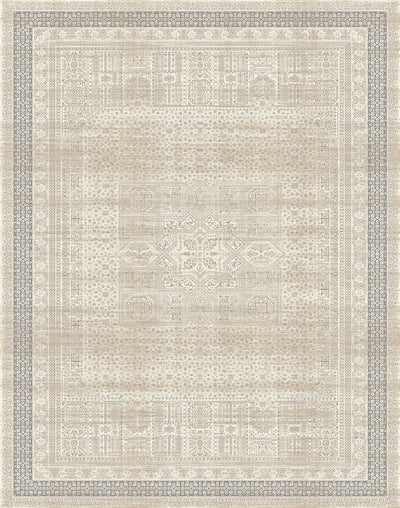
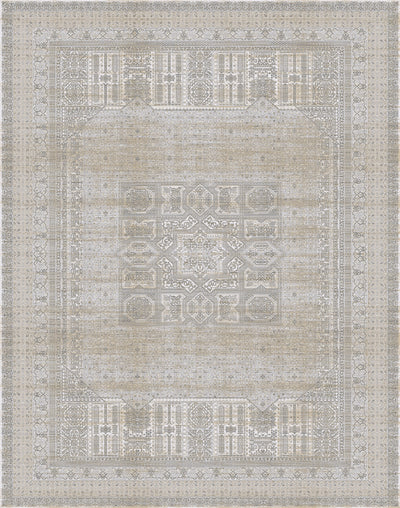
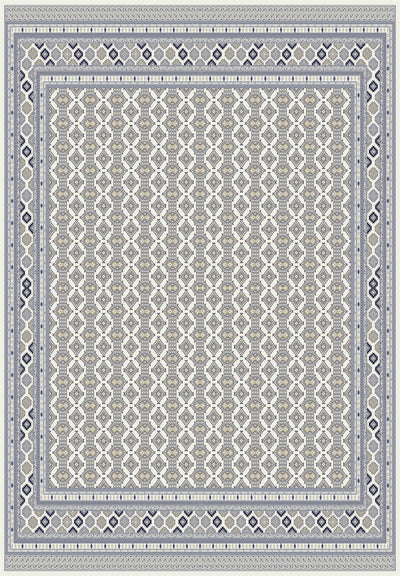
- Cream, ivory and light gray give the strongest contrast. Our cream and ivory rugs and the lighter end of our gray rugs are the place to start.
- Bright or saturated color such as a clear red or a strong blue looks dramatic on espresso, almost like a framed painting.
- Be careful with charcoal and black. They disappear on espresso. If you like a dark rug, choose one with a pale border or plenty of light pattern.
The trade-off with a pale rug on a dark floor is upkeep: it shows dirt sooner. A rug with a light ground but a busy, multicolor pattern is a good middle path, because the pattern breaks up the marks that a plain cream rug would show.
Mahogany and cherry floors
Mahogany and cherry are dark with a strong red or orange undertone. The undertone is what you're working with.
- Navy and deep blue are the best match. Blue calms the red in the wood, and the contrast in temperature keeps the rug distinct even when it isn't much lighter. See our blue rugs.
- Cream and ivory work for a more traditional room.
- Sage and muted green are a softer pairing that suits older homes with cherry trim.
- Avoid red rugs that sit close to the wood's tone. A burgundy rug on mahogany tends to look like one dark red surface. If you love red, choose one with a lot of ivory or blue in the pattern.
Gray-stained and smoked dark floors
Some dark floors are stained toward gray rather than brown, which is common in newer builds and in luxury vinyl that imitates wood. On these floors the rules for cool tones apply: warm cream, rust and soft red add warmth, while navy and light gray keep it modern. Our article on rug colors for gray floors covers this in more detail.
Pattern, light and room use
Pattern hides dust
Dark floors show dust and pet hair, and so do plain rugs. An all-over pattern with three or four colors hides crumbs, paw prints and the slight shading you get in the walking path. This matters more on dark wood, where the floor itself is already showing everything.
Check the light
Rooms with dark floors are often dim in the evening. A rug that looks crisp ivory in the showroom can look beige under warm bulbs at night. The guide to light direction and rug color explains why, and how to test a rug at the times you actually use the room.
Living room, bedroom and dining room
- Living room: a larger rug gives more light surface. 8.2×11.5 ft (250×350 cm) or 10×13 ft (300×400 cm), our largest size, cover most of the floor in a typical living room.
- Bedroom: a light rug under the lower two-thirds of the bed means your feet land on something soft and bright in the morning. See rug sizes under a queen or king bed.
- Dining room: chairs scrape and food falls, so a mid-tone patterned rug is more practical than ivory. Use the 24-inch clearance rule to size it.
Protecting a dark wood finish
Dark stains show scratches more than light ones, because a scratch exposes the paler wood underneath. A rug under the main walking path and under chair legs protects the finish where it gets the most wear. Keep the floor swept before the rug goes down, since grit trapped under a rug acts like sandpaper.
Our main rugs have a cotton backing that lies flat, and at about 3 m² (32 sq ft) and up they generally don't need a pad on wood. On a small rug or a runner in a hallway, a thin non-slip underlay safe for finished wood can stop it creeping. Because the pile is solution-dyed polypropylene and polyester, it resists fading, and shifting the rug a few inches a couple of times a year helps avoid a visible line where sunlight has darkened or lightened the exposed wood.
Questions we get
Can I put a dark rug on a dark floor?
Yes, if it's a different temperature or has light elements. Navy on espresso can work; chocolate brown on espresso usually doesn't.
Is a white rug too risky on dark wood?
Pure white shows dirt quickly in busy rooms. Ivory or cream with a pattern gives nearly the same brightness and is much easier to live with.
What rug color makes a dark room feel bigger?
A light rug that covers as much floor as the furniture allows. The more light surface, the larger the room reads.
Does the rug need to match my wood furniture too?
No. Wood furniture on a dark floor is another reason to go lighter with the rug, so the furniture has something to stand out against.
Quick checklist
- Choose clearly lighter than the wood, or a cool color the wood doesn't contain.
- Walnut: ivory, soft blue, muted multicolor. Espresso: cream, light gray, bold color.
- Mahogany and cherry: navy, cream, sage. Avoid matching reds and browns.
- Use the black-and-white photo test to check contrast.
- Pattern hides dust; plain pale rugs show it.
Shop cream and ivory rugs, gray rugs, blue rugs or the whole rug collection. If your floor is lighter, see our guide to rug colors for oak floors. Shipping is free in the US and Canada on orders over $110.
See them on a dark floor in Sacramento
The quickest way to judge contrast is to see a rug against a sample of your wood. Our showroom is at 3423 Watt Avenue, Sacramento, CA 95821, open daily 10 AM–7 PM. Bring a photo or a spare plank, or call (916) 890-4077 before you come.