Most furnishings sit still through the year. Sofas don't know it's winter; lamps don't react to summer. Rugs are different — they're the surface you walk on barefoot or in socks, the surface your feet rest on for hours each evening. A rug carries seasonal weight in a way the rest of the room doesn't. Honest seasonal rug styling isn't about following trends; it's about matching the floor to how the body wants the room to feel in each season.
TL;DR
- Winter wants higher pile, denser construction, and warmer tones — the foot wants insulation underneath socks
- Summer wants flat-weave or low pile, breathable fiber, and lighter palette — the foot wants coolness underneath bare feet
- The standard rotation: two complementary rugs (one heavier, one lighter) swapped at the seasonal hinge points
- The single-rug alternative: a neutral hand-knotted wool used year-round, with a seasonal layered accent (a flat-weave on top in summer, removed in winter)
- Properly stored, a rotated rug lasts longer than one used continuously — rotation is preservation
Why rugs respond to seasons more than other furnishings
Three reasons. Body contact — a rug is the only furnishing the body touches with bare feet, and bare-foot perception of temperature and texture is acute. A wool deep-pile rug in July feels muggy; the same rug in January feels grounding. Visual temperature — palette reads differently in different light. Warm rusts and umbers feel right under low winter sun; cool sages and blues feel right under high summer sun. The colors don't change but the eye registers them differently. Air circulation — thick pile holds heat; flat-weave releases it. In a tightly-sealed winter home, the heat-holding quality is comfort; in a summer home with windows open, the same property reads as stagnant.
Winter rugs — what changes
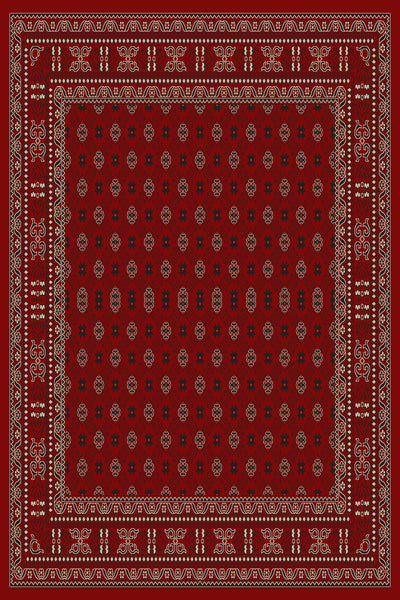
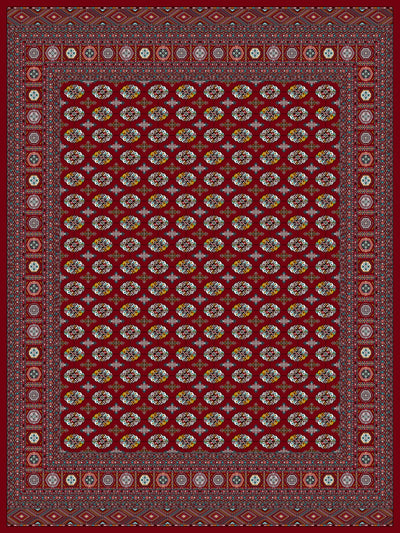
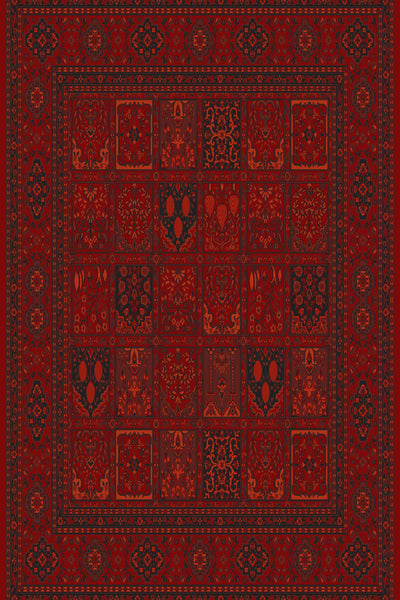
Three properties matter more in winter. Pile height: medium-to-high pile (1/2 inch and up) traps air and insulates underfoot — the bare-feet-in-socks effect. Density: a denser knot count or denser tufting holds more air and reads as more substantial visually. Palette: warm tones (rust, terracotta, deep red, gold, walnut, mocha, charcoal) read warmer to the eye and pair with the indoor light of winter (lower angle, more amber). The classic winter rugs in our inventory are deep-pile hand-knotted Persian medallions in warm-toned palettes, layered Berbers in cream-and-charcoal, and rich-toned Heriz and Bidjar designs. For specific palette guidance see warm vs. cool rug palettes.
Summer rugs — what changes
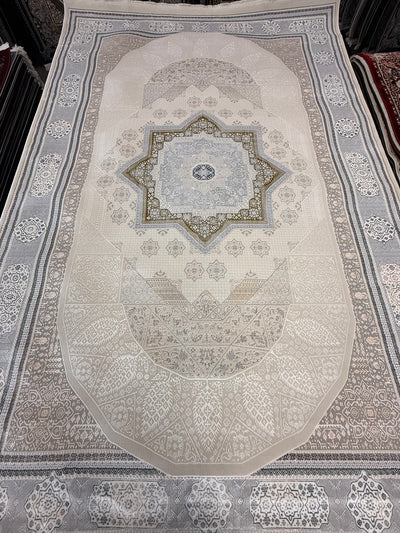
Inverse properties. Pile height: low pile (1/4 inch and below) or flat-weave (kilim, dhurrie, sumak) releases heat and reads cool underfoot. Construction: kilims, soumak weaves, and tightly woven low-pile flat-weaves let air pass and don't trap dust or heat. Palette: cool tones (cream, ivory, soft blue, pale sage, muted lavender, soft grey) read cool to the eye and pair with the harsher, higher-angle summer light. Fiber: pure wool is comfortable year-round but cotton kilims and linen-blend flat-weaves can read even lighter and breathe more freely. Classic summer rugs: cream-and-blue kilims, pale dhurrie cottons, low-pile flat-weave Persians in soft palettes, and natural-fiber pieces like jute or sisal as bases for layering.
The two-rug rotation
The standard seasonal protocol: maintain two complementary rugs in similar sizes — one heavier (winter) and one lighter (summer) — and rotate them at the seasonal hinge points. The hinge in our climate is roughly mid-October (winter rug down) and mid-April (summer rug down), though the actual timing follows when you start feeling cold feet in the evening or muggy feet in the morning. The two rugs should share enough palette family that the rest of the room (sofa, art, window treatments) works with both. Coordinated, not identical: a deep red Heriz for winter and a cream kilim with red accents for summer share the accent palette but read entirely different in feel.
The single-rug alternative — layered accent
The two-rug rotation is the most thorough approach but requires storage space and a budget for two pieces. The alternative is keeping one quality hand-knotted wool rug year-round (typically a medium-pile, mid-palette piece that works in both seasons) and adding a seasonal layered accent. In summer: a small flat-weave or kilim placed on top of the base rug to anchor the seating group, adding visual lightness and breathability where bare feet land. In winter: the layered accent is removed, exposing the warmer base rug fully. The base rug does most of the work; the accent does the seasonal differentiation. For the full layering protocol see layering rugs — when to do it.
Sacramento climate logic
The seasonal hinge points and palette logic vary by climate. In Sacramento and the broader Northern California valley, the seasons are more compressed than the East Coast — a longer warm season (April through October) and a shorter cool season (November through March) with mild temperatures and large diurnal swings. The implication: summer rugs work for roughly 7 months; winter rugs for 5. The summer palette can lean warmer than New England summer (sun is more direct, light more amber-toned) and the winter palette can lean lighter than colder climates (less sustained gloom). Local foliage cues also matter — Sacramento valley oaks turn late, so the visual transition to warm-toned rugs happens later than in higher elevations.
Storage between seasons
A rotated rug stored properly lasts longer than one in continuous use. The protocol: clean before storing — a vacuumed and professionally cleaned rug stores without supporting insect or microbial growth; a dirty rug stores with the soils embedded for the duration. Roll pile-side-in around a sturdy core (rug tube, PVC pipe wrapped in clean cotton), never folded — folds crease the foundation permanently. Wrap in breathable cotton or muslin, never plastic — plastic traps moisture and supports mildew. Store in a climate-controlled space — attics and basements with temperature swings and humidity cycles are wrong; a closet in the conditioned interior of the house is right. Check periodically — unroll once or twice per off-season, inspect for insects (clothes-moth and carpet-beetle damage to wool happens in storage), re-roll. See antique and vintage rug care for the full storage protocol.
The rotation as preservation
A rug that handles half the year's traffic lasts longer than one handling all of it. Combined with quarterly rotation (180-degree turn every three to four months) within each season's use, the seasonal rotation distributes wear across the rug's surface and across calendar time. A pair of rugs each used half the year may collectively outlast a single rug used continuously — and the seasonal expression of the room is more deliberate. See how and when to rotate a rug for the quarterly-rotation protocol within each season.
What to avoid
Three pitfalls. Synthetic "seasonal" rugs that aren't quality enough to last — buying disposable polypropylene rugs in seasonal colors loses the longevity argument that justifies rotation in the first place; both rugs should be quality wool, cotton, or hand-knotted pieces. Identical rugs in different colors — the same pattern in summer and winter palettes reads as a literal swap; better to have genuinely different patterns or constructions that feel seasonally distinct. Storage shortcuts — folding instead of rolling, plastic instead of cotton, attics instead of conditioned interior — all of these reduce rug life and partly defeat the rotation's preservation benefit.
From our Sacramento showroom
Seasonal rotation consultations come most often from established collectors in East Sacramento, Land Park, Sierra Oaks, Granite Bay, and El Dorado Hills who have invested in multiple hand-knotted pieces over years and want to think about how they're being used through the calendar. Our standard approach: identify two pieces from the existing collection (or one piece and a new complementary acquisition) that can rotate, recommend a storage protocol, and schedule professional cleaning at the rotation point. Visit our showroom to discuss rotation strategies.
Related guides
- Rug size guide (Cluster 9 pillar)
- Rug care and maintenance (Cluster 8 pillar)
- How and when to rotate a rug
- Layering rugs — when to do it
- Warm vs. cool rug palettes
- Antique and vintage rug care
Frequently asked questions
Should I have different rugs for summer and winter?
If you have the budget and storage for two rugs in similar sizes, yes — a heavier winter rug (medium-to-high pile, warm tones) and a lighter summer rug (flat-weave or low pile, cooler tones) is the most expressive seasonal strategy. The alternative is one neutral hand-knotted rug used year-round with a seasonal layered accent added in summer.
What kind of rug is best for summer?
Flat-weave (kilim, dhurrie, soumak) or low-pile (under 1/4 inch) hand-knotted wool. Cooler tones — cream, ivory, soft blue, pale sage, muted lavender — read cool visually. Breathable fiber that releases heat and doesn't trap dust performs best in summer.
What kind of rug is best for winter?
Medium-to-high pile (1/2 inch and up) hand-knotted wool with denser construction. Warm tones — rust, terracotta, deep red, gold, walnut, mocha, charcoal — read warm visually and pair with lower-angle winter light. The body wants insulation underfoot.
How do I store a rug between seasons?
Clean before storing, roll (don't fold) pile-side-in around a sturdy core, wrap in breathable cotton (never plastic), store in climate-controlled space within the conditioned interior of the house. Inspect periodically for insect damage. Proper storage extends rug life and lets seasonal rotation become genuine preservation rather than wear-and-tear.
Does seasonal rotation actually make rugs last longer?
Yes. A rug handling half the year's traffic lasts longer than one handling all of it, and the off-season rest gives compressed pile time to recover. Combined with the standard quarterly 180-degree rotation within each season's use, seasonal rotation distributes wear across both the rug's surface and across calendar time.