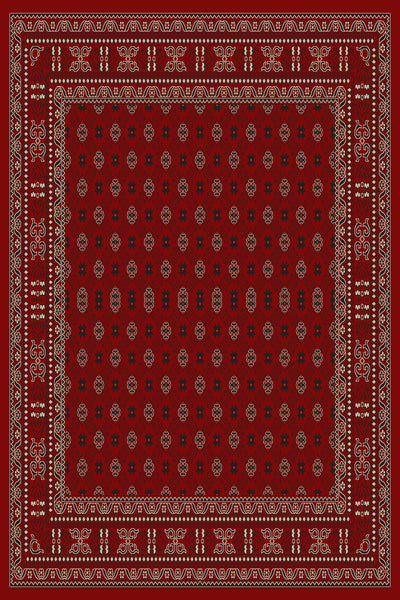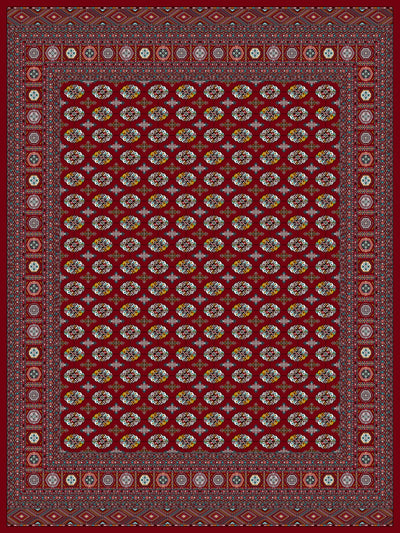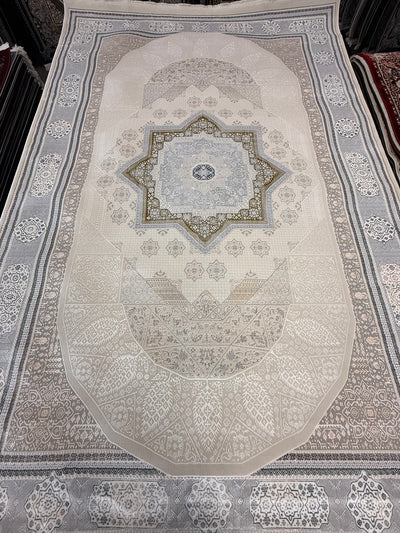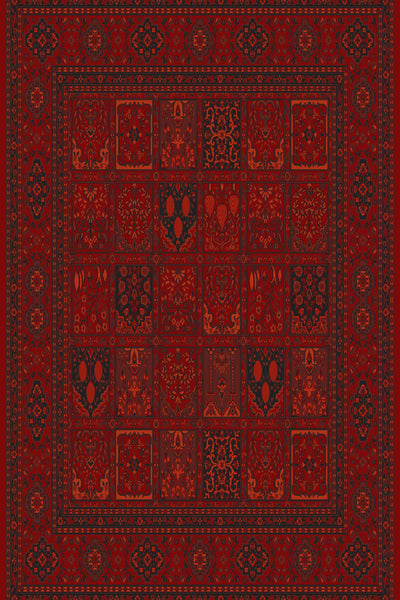

A beautiful rug on the wall reads like a painting, and for kilims and finely patterned flatweaves it is often the perfect way to show them off. But a rug is not a poster. Hang it wrong and you stretch the foundation, tear the pile, or leave permanent puncture marks. The good news is that the safe methods are simple, inexpensive, and used by museums for exactly this reason: they spread the rug's weight evenly instead of hanging it from a few stressed points.
The best method: a sewn fabric sleeve and dowel
The gold standard is a fabric sleeve (casing) sewn along the top back edge of the rug, with a wooden dowel or metal rod slid through it. Because the rug hangs from the entire top edge rather than a handful of points, the weight is distributed evenly and the foundation is not stressed. Here is the approach:
- Cut a strip of strong, neutral fabric a couple of inches narrower than the rug and a few inches tall.
- Fold it into a tube and hand-sew it to the back of the rug along the top edge, stitching into the foundation (not through to the face). Leave both ends open.
- Slide a dowel or rod through the sleeve, then rest or mount the rod on sturdy wall brackets anchored into studs.
If sewing is not your thing, this is light handwork that any upholsterer or alterations tailor can do in an afternoon. We do not sew hanging sleeves — the one service we offer is edge overlocking, on rugs bought from us.
A faster alternative: heavy-duty velcro
For lighter rugs, a hook-and-loop (velcro) system works well. Sew the soft loop side of a strip onto the back top edge of the rug, staple or screw the stiff hook side to a wooden batten, and mount the batten to the wall through studs or anchors. As with the sleeve, the load spreads along the whole edge. Sew the velcro to the rug rather than gluing it, since adhesive can stain and eventually fail.
What you should never do
- No nails, tacks, staples, or clips through the pile. They concentrate the entire weight on tiny points, which tears the foundation and leaves permanent holes and pulls.
- Do not hang a rug by its fringe. Fringe is the end of the foundation warps; hanging from it will unravel the rug over time.
- Mind the weight and the wall. Rugs are heavier than they look. Always anchor brackets or battens into studs or use rated wall anchors, never just drywall.
Which rugs suit wall display
Lighter, flatter pieces are the best candidates. Flatweaves and kilims are ideal because they are thin and even, which is why our oriental rugs and decorative Turkish rugs are popular wall pieces. Smaller, lighter rugs hang more safely than large heavy ones, and a bold pattern reads beautifully from across a room. For something low-stress to start with, browse our area rugs.
Caring for a hung rug
A rug on the wall still needs occasional attention. Rotate it every several months so light fading and the strain of hanging are spread evenly across the piece. Dust it gently with a vacuum on low suction (or a soft brush attachment) to keep it from collecting grime, and keep it out of harsh direct sunlight to protect the colors. For deeper cleaning notes, our care guide is a good reference. If the edge of a rug you bought from us ever needs re-finishing, we overlock it in our Watt Avenue workshop — that is the only service we offer.
Want help choosing the right piece to display? Visit Stylish Rugs & Carpets, 3423 Watt Ave, Sacramento, CA, open daily 10 AM–7:30 PM. Call (916) 890-4077 or use our contact page, and remember shipping is free on orders over $110 across the USA and Canada.