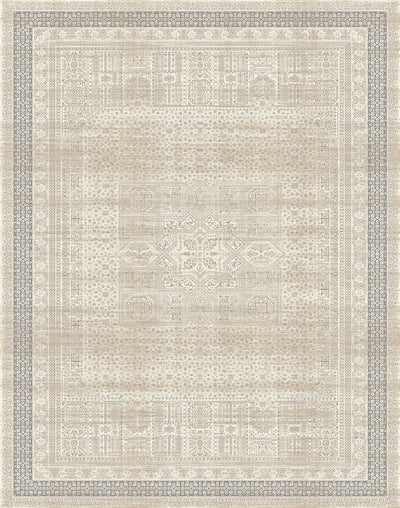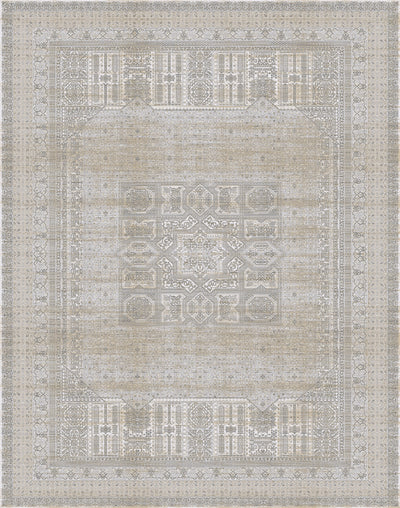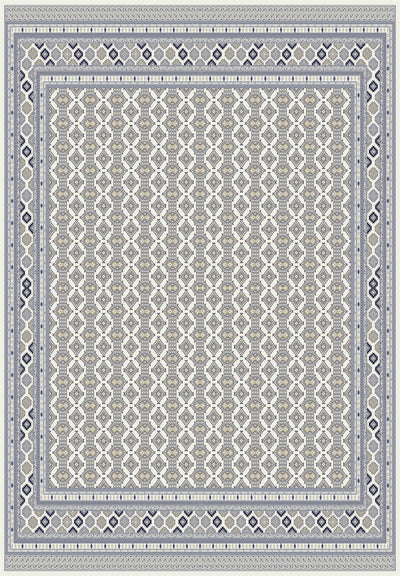

Falls are a serious matter for older adults. The CDC reports that about one in four adults aged 65 and older falls each year, and home hazards play a part in many of those falls. Rugs come up in every home-safety checklist, which leads some families to roll them all up. That isn't always the best answer: a well-chosen, well-secured rug can make a cold hard floor warmer and less slick for stockinged feet. The trick is choosing and placing the right ones.
This is practical guidance from people who sell rugs, not medical advice. If someone in your home has balance problems, a recent fall or uses a walker, an occupational therapist can do a home safety assessment, and their advice should come first.
What makes a rug a trip hazard
- Small, light rugs such as bath mats, doormats and accent rugs slide on hard floors and bunch up when a foot catches the edge.
- Curled corners and rippled edges raise a lip that a shuffling step or a walker wheel catches.
- Thick or shaggy pile makes for an uneven, soft surface that can turn an ankle and is hard to push a walker or wheelchair across.
- Edges that blend into the floor are hard to see, especially for people with low vision or in dim light.
- Loose fringe can catch walker wheels and the toe of a slipper.
What a safer rug looks like
Big and heavy
A large rug with furniture standing on it doesn't move. A rug of roughly 3 m² (about 32 sq ft) and up, such as a 5×7.5 ft or larger, with a bed, sofa or chairs holding it down, is far more stable than a small mat. As a rule, replace several small rugs with one larger one.
Low, dense pile
A short, firm pile gives a level surface that feet, canes and walker wheels move across easily. Dense machine-woven rugs are a good fit here. Avoid shag, plush and very thick rugs in any room used by someone unsteady.
Completely flat
The rug should lie flat from edge to edge with no curling. A new rug may need a few days to relax after being rolled; reverse-roll any stubborn corner and check it again before the room goes back into use.
Visible edges
Choose a rug whose border contrasts with the floor: a mid- or dark-toned rug on a pale floor, or a lighter rug on a dark floor. Contrast makes the edge easy to see. Some people with dementia or certain vision problems find very busy, high-contrast patterns confusing, so for them a calmer design with a clear border is often easier.
Room by room
Bedroom
The most important rug in the house for an older adult is the one beside the bed, because the first steps of the night happen in the dark, half awake. Make it large enough that feet land well inside the rug, not on its edge. An 8.2×11.5 ft rug under a queen or king bed, extending out on both sides, is far safer than a small bedside mat. Add a night light along the route to the bathroom.
Living room
One large rug under the seating group, with the sofa and chairs on it, rather than a small rug floating in the middle of the room. Keep the main walking route either fully on the rug or fully off it, so nobody steps over an edge on the way to the kitchen.
Hallways
Runners are useful on slippery hallway floors, but they need to stay put. Our runners are 3 ft wide, wide enough that a walker's wheels stay on the runner rather than straddling the edge. Smaller runners don't have furniture to hold them, so use a thin non-slip gripper rated for your floor type underneath.
Bathroom and kitchen
These are the hardest rooms. Water makes floors slippery and bath mats are small and light. Use mats with a non-slip backing designed for wet floors, keep them flat, and replace them when the backing wears. A large decorative rug usually isn't the right choice here.
Walkers and wheelchairs
- A dense, low pile is easiest to push across. Thick pile and soft pads underneath make wheels drag.
- Edges are the challenge. A heavy rug with a thin edge is easier to roll onto than a lightweight rug with a raised border.
- Our rugs have hand-finished fringes on the short ends. In a room used with a walker, place the rug so the fringed ends sit under furniture or along a wall, not across the main path.
- Leave clear, rug-free paths between rooms where possible, so wheels don't need to climb on and off.
Securing a rug the right way
- Furniture first. Front legs of a sofa, a bed, a dining table: nothing secures a rug better.
- A thin gripper for runners and smaller rugs. Choose one rated for your floor, and avoid thick, spongy pads that make the surface less firm.
- Double-sided rug tape is suggested by the CDC as an option for keeping rugs from slipping. On hardwood or vinyl, check that the tape is safe for the floor finish.
- Check monthly. Rugs creep and corners curl over time. A quick look during cleaning catches problems before someone trips.
Quick checklist
- Remove small throw rugs and loose mats, or secure them.
- Prefer one large, heavy rug held down by furniture.
- Low, dense pile; no shag, no thick pads.
- Completely flat; no curled corners.
- Edges that contrast with the floor; calm patterns for low vision or dementia.
- Bedside rug big enough that feet land well inside it.
- Fringed ends away from walking and walker paths.
- Ask an occupational therapist for a home assessment if falls are a concern.
Browse our rug collection by size, or use the rug size guide to plan a layout where every rug sits under furniture. Shipping is free in the US and Canada on orders over $110.
Shopping for a parent?
It helps to see the rugs in person and feel how firm the pile is underfoot. Our showroom at 3423 Watt Avenue, Sacramento, CA 95821 is open daily 10 AM–7 PM, and we're glad to unroll rugs so you can walk on them, or roll a walker across them, before you choose.