
Polypropylene, sometimes labeled olefin, is one of the most common fibers in affordable and mid-priced area rugs in the US. It's also a fiber people ask about with some worry: is it toxic, will it smell, is it OK for a baby who is about to start crawling? Those are reasonable questions, and they deserve plain answers rather than marketing.
What polypropylene actually is
Polypropylene is a thermoplastic made from propylene, a petroleum by-product. It's used in food storage containers, yogurt cups, medical devices, car parts and outdoor furniture. For rugs, it's melted, colored and spun into yarn. Most rug-grade polypropylene is solution-dyed, meaning the color is added to the molten plastic before the fiber is made, so the color runs all the way through rather than sitting on the surface.
Two properties matter for safety:
- It's chemically stable. At room temperature it doesn't break down, react with household cleaners or leach dyes, which is one reason it's trusted for food contact.
- It absorbs almost no water. That makes it resistant to mold growing in the fiber itself and helps water-based spills sit on the surface long enough to be blotted.
Where the "new rug smell" comes from
When a new rug or carpet smells, the smell is volatile organic compounds (VOCs) evaporating from the product. In wall-to-wall carpet, a well-known source is the latex adhesive that bonds tufted fibers to a secondary backing. In rugs generally, smell can also come from:
- Back coatings and adhesives on tufted and some low-cost rugs.
- Finishing treatments applied at the factory.
- Packaging. A rug that has spent weeks rolled in plastic in a container or warehouse often smells of the plastic and the storage, not of itself.
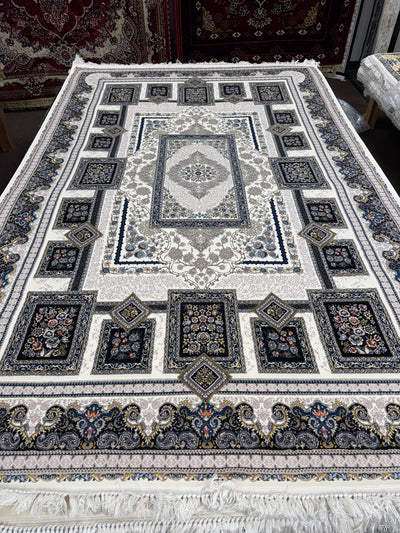
Woven construction is relevant here. In a machine-woven rug, the pile is woven into the foundation on the loom, so the rug doesn't rely on a thick glued-on backing to hold the fibers in place the way a tufted rug does. Our rugs are machine-woven in Türkiye with a cotton backing. Any rug can still carry a packaging odor when first unrolled, though, so the airing steps below apply to every rug, ours included.
How to get rid of new rug smell
- Unroll it right away. A rolled rug traps odor in the layers.
- Ventilate. Open windows and run a fan for the first few days. Cross-ventilation clears VOCs much faster than a closed room.
- Air it in the shade if you can. A day on a clean, dry patio or garage floor with the door open helps. Avoid hours of strong direct sun, which can fade some dyes.
- Vacuum it. This lifts loose fibers from manufacturing and packaging dust.
- Baking soda, if you like. Sprinkle it lightly, leave it overnight, vacuum thoroughly. It's harmless and helps with general odors, though ventilation does most of the work.
- Give it time. Most odors fade noticeably within a few days and are gone within a couple of weeks. A smell that gets stronger rather than weaker usually means moisture, not off-gassing, and needs checking.
Polypropylene rugs and babies, kids and pets
For a crawling baby, the practical concerns are the same with any rug: keep it clean, keep it dry, and keep small loose objects out of the pile. Polypropylene doesn't feed mold or bacteria in the fiber, and water-based spills like milk and juice are relatively easy to blot. Allow a new rug a few days of airing before a baby spends long periods on it, which is good practice for any new furnishing.
For pets, polypropylene's resistance to water-based stains is a genuine help with accidents, provided you deal with them quickly; urine left to soak into the backing is a problem on any rug. Our guide to rugs for pet households covers the details.
Honest limitations
Polypropylene is safe, but it isn't perfect, and it's worth knowing where it falls short:
- Heat. Polypropylene melts at about 320°F (160°C). Keep rugs away from open fires, wood stoves and space heaters; a dropped curling iron or a spark will leave a permanent melted mark.
- Oily stains. It resists water-based spills but attracts oil. Greasy food, cooking oil and some lotions should be blotted fast and treated with a little dish soap in water.
- Fiber shedding. Like all synthetic textiles, a polypropylene rug sheds some fibers, especially in the first weeks. Regular vacuuming keeps that under control.
- It's a plastic. If you prefer to avoid petroleum-based materials altogether, wool or cotton rugs are the alternatives, with their own trade-offs in price and care.
What to look for when buying
- Construction. Woven rugs generally rely less on adhesive backings than tufted rugs.
- Third-party testing labels. In the US, the Carpet and Rug Institute's Green Label Plus program tests carpets and rugs for VOC emissions. Not every rug is tested, so its absence isn't proof of a problem, but its presence is reassuring.
- A clear fiber listing. If a listing won't tell you what the pile is made of, ask before you buy. We're happy to tell you the pile fiber of any rug we sell; our pile is polypropylene or polyester depending on the line.
To compare polypropylene with other fibers, our guide to rug materials sets it next to wool, viscose and silk.
Quick checklist
- Polypropylene is chemically stable and widely used for food containers.
- New-rug smell mostly comes from adhesives, coatings and packaging.
- Unroll, ventilate and vacuum; most smell fades within days.
- A smell that grows instead of fading usually means moisture.
- Keep it away from heat sources; blot oily stains quickly.
- Ask the seller for the pile fiber if the listing doesn't say.
See the full range in our rug collection. Shipping is free in the US and Canada on orders over $110, and if a rug isn't right you can return it unused, in its original packaging, within 30 days (return shipping is paid by the customer).
Smell it for yourself
The simplest test is in person. Visit our showroom at 3423 Watt Avenue, Sacramento, CA 95821, open daily 10 AM–7:30 PM, and see, touch and yes, smell the rugs before you buy one for a nursery or a bedroom.